
Fast diagnostics first
We start by confirming the failure point: power, gas, ignition, sensors, scale, venting, or a control issue. That makes the repair plan simpler and the outcome more predictable.
Serving Seattle, Washington & surrounding areas
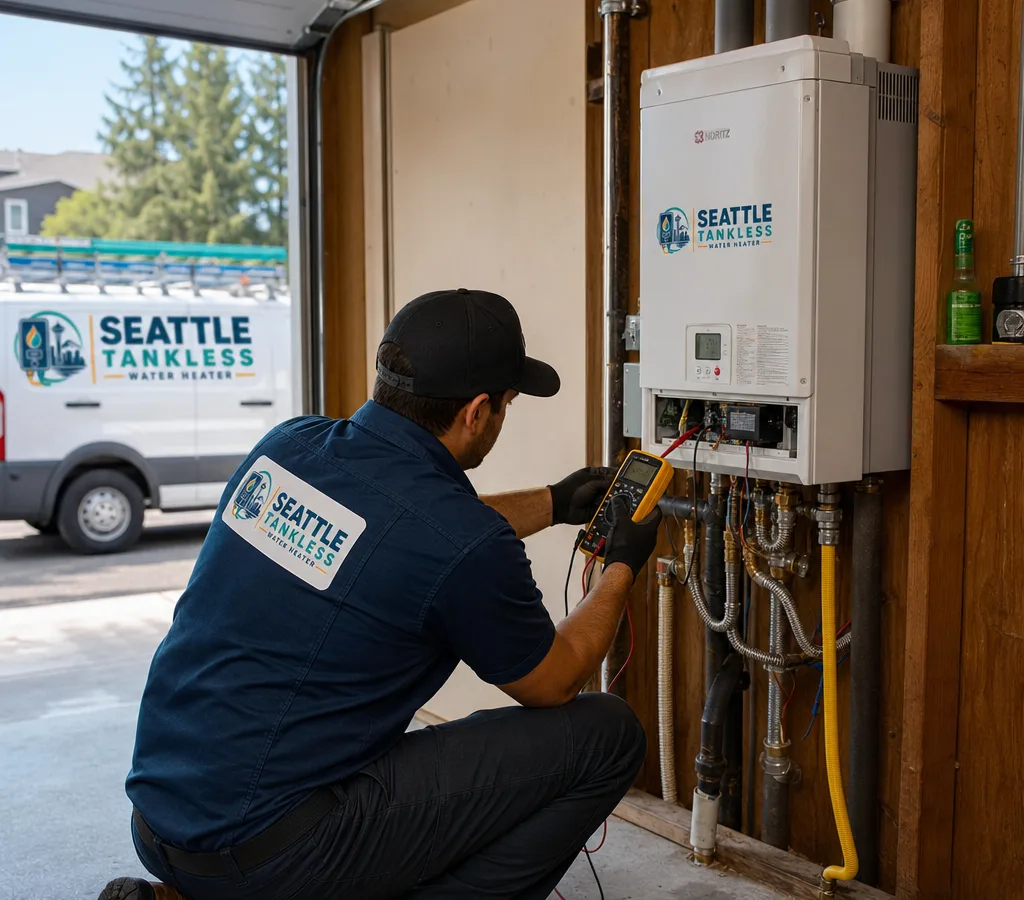
Water heater repair · Seattle
Get hot water back with fast troubleshooting, clear options, and a repair plan that fits your heater and your home.
No hot water, mid-shower temperature drops, leaks, unusual noise, ignition trouble, and error codes all call for testing the complete system—not guessing at a part.
Cause-first diagnostics
If you searched for water heater repair Seattle, you probably have one problem: you need reliable hot water again, and you need a straight answer on what failed. Seattle Tankless Water Heater troubleshoots water heaters by symptom and by system, then confirms the cause with on-site testing so you are not paying for guesswork.
We work on common issues like no hot water, water that turns cold mid-shower, leaking tanks, unusual noise, pilot or ignition problems, temperature swings, error codes, and slow recovery. Repairs are handled with safety and code compliance in mind, including combustion air, venting, gas shutoff integrity, electrical connections, and proper relief valve operation.
Seattle homes vary a lot by layout. A tight utility closet in a Capitol Hill condo, a finished basement in Ballard, or a garage install in West Seattle can all change access and diagnosis time. We come prepared to trace the problem across the full system: water supply, shutoffs, thermostats and elements for electric units, burner and gas valve for gas units, venting, condensate and neutralizer for condensing units, and the temperature and pressure relief discharge piping.
If you are comparing options or planning an upgrade after a repair, our water heater service approach focuses on matching capacity and venting to the home instead of forcing a one-size pick.
Repair service standards
We start by confirming the failure point: power, gas, ignition, sensors, scale, venting, or a control issue. That makes the repair plan simpler and the outcome more predictable.
You get clear repair options before parts get installed. If a replacement makes more sense than a repair, we will explain why in plain terms.
We troubleshoot conventional storage heaters and tankless units, including issues tied to airflow, condensate handling, and temperature stability.
We check essentials like shutoff operation, venting condition, combustion basics for gas units, and the TPR valve and discharge piping, because those are not optional items.
We protect floors, work clean, and keep access in mind. In smaller Seattle mechanical spaces, careful layout and neat piping matter for future serviceability.
If the unit is at the end of its life, you will get a realistic path forward: repair now, plan a replacement, or adjust settings and maintenance to reduce repeat problems.
Symptoms and causes
A good repair starts with narrowing symptoms to a short list of likely causes, then verifying with testing.
Seattle's cooler months are when these issues feel urgent. We prioritize restoring safe operation, then recommend maintenance steps that reduce the chance of another cold-shower morning.
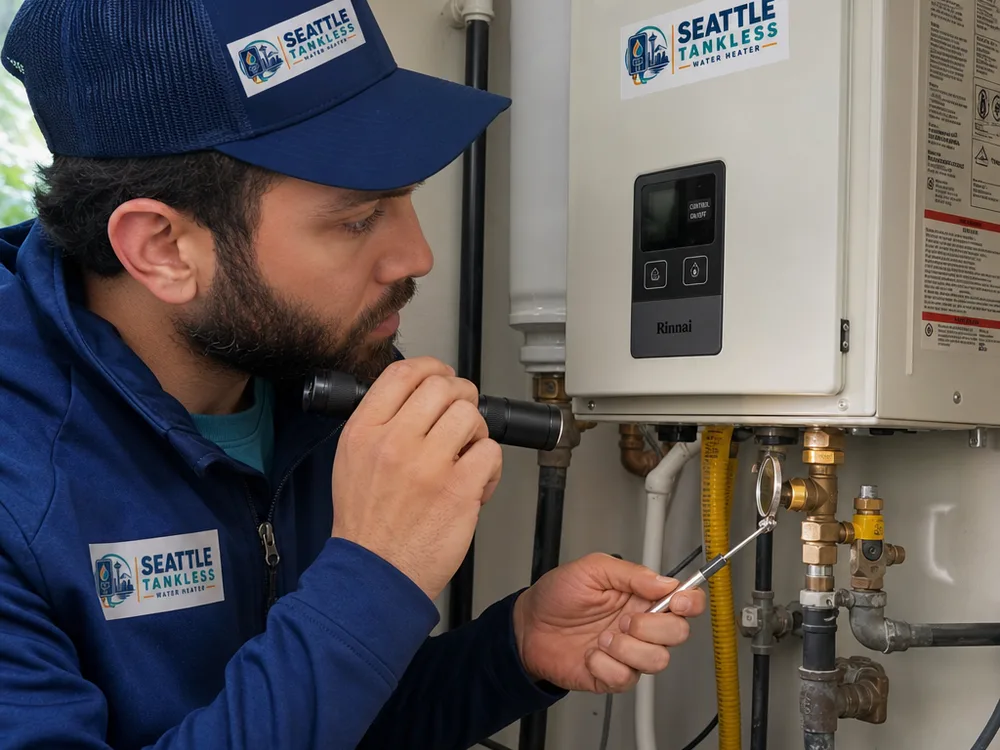
We confirm what you are seeing: error codes, leaks, odor, noise, or inconsistent temperature. If there is any safety concern, we start by stabilizing the situation.
We test the heater and supporting components: power and amperage for electric units, ignition and flame signal for gas units, sensor readings, flow rate and inlet temperature, shutoff valves, and visible venting or condensate issues.
You get a written scope with options when appropriate: a straightforward part replacement, a deeper corrective repair, or a replacement recommendation if the unit is not a good candidate for repair.
We complete the repair, then verify operation under real demand. That includes confirming stable outlet temperature and checking for leaks at all disturbed fittings.
Before we leave, we review practical next steps like temperature setpoint, flushing intervals, filters and screens for tankless systems, and signs to watch for so you can avoid repeat failures.
Seattle pricing guidance
Water heater repair in Seattle typically ranges from about $225 to $1,100, depending on whether it is a minor electrical or ignition fix, a valve or sensor replacement, or a larger repair that involves multiple components. Smaller repairs often land around $225 to $450, while more involved troubleshooting and parts can run $500 to $1,100+.
Your final price depends on the heater type—tank or tankless—access to the unit, the exact failed part, venting or condensate corrections when needed, and whether age or corrosion limits what can be repaired. Exact pricing is confirmed after on-site diagnostics and a written scope.
Common questions
Yes. We repair standard tank-style water heaters and tankless units, and we diagnose the full system around them, including shutoffs, venting for gas units, condensate for condensing tankless systems, and temperature-control components.
Not always. A leak from a fitting, valve, or the TPR discharge area may be repairable, but water coming from the tank body itself often means internal corrosion and a replacement plan is usually the safer route. We confirm the leak source before recommending anything.
Start with safety and simple checks: confirm power at the breaker for electric units, and confirm the gas shutoff valve is open for gas units. If you notice a gas odor, leave the area and contact the gas utility right away. After that, a proper diagnosis typically requires checking components like thermostats and elements for electric units or ignition and flame sensing for gas units.
Temperature swings are commonly caused by low flow below activation, scaling that reduces heat transfer, sensor issues, or cross-connection in plumbing that mixes hot and cold. We test flow, verify sensor readings, and check for mixing sources so the fix targets the real cause.
Yes. Error codes usually point to a category of problem, like ignition or flame, airflow, overheating, or sensor faults, but the code alone does not confirm the failed part. We read the code, test the related components, and verify operation after the repair.
Many repairs can be diagnosed and completed in a single visit, often within 1 to 3 hours, but timing depends on access, the type of heater, and whether multiple issues are found. If a special-order part is needed, we will outline the safest interim steps and the earliest completion plan.
Replacement is often the better choice when the tank is leaking from the body, when repeated failures suggest broader deterioration, or when the repair cost is high relative to the unit's remaining service life. We will explain the reasoning clearly so you can decide with confidence.
Schedule diagnostics
Tell us what your water heater is doing, and we will schedule diagnostics in Seattle and provide a clear repair plan before any work starts.